Radial Magnets? or Axial Magnets?
The type of magnet and the orientation you use with the AS5600 encoder changes everything about the design of a product.
I understand that the data sheet says AS5600 has applications for 1. diametric and 2. on-axis.
General Description:
The AS5600 is an easy to program magnetic rotary position sensor with a high-resolution 12-bit analog or PWM output. This contactless system measures the absolute angle of a diametric magnetized on-axis magnet. This AS5600 is designed for contactless potentiometer applications and its robust design eliminates the influence of any homogenous external stray magnetic fields.
But, Here’s what actually happens when you ignore both of those rules and test things out of curiosity:
Axial magnets are having North Pole and south poles through the flat faces. Imagine the coin with head and tails. That’s what I mean.
They easily stack up one after another.
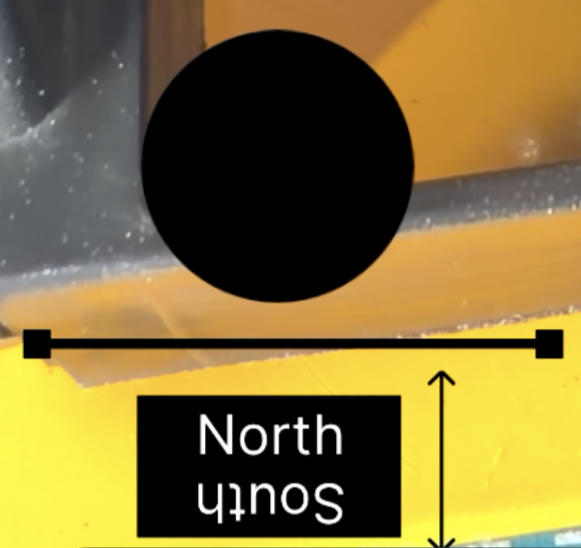
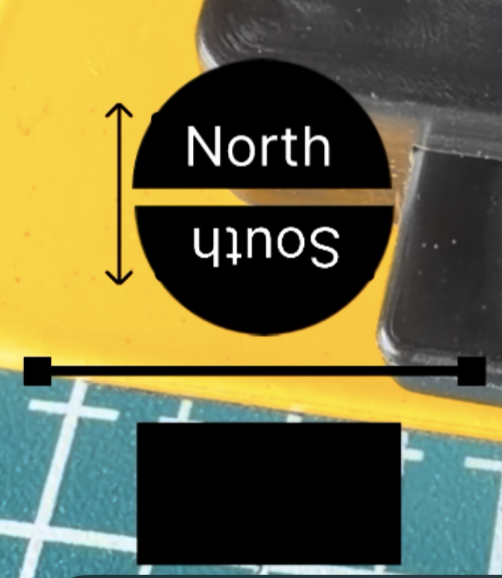
Diametric magnets are magnetized across the diameter.
If you split the circle to 2 parts, then the first half will be North Pole and the other half will be South Pole.
Diametric magnets do not easily stack up one after another.
There are other variations of AS-xxxx series, which support for different orientations of the magnetic field, but I see that as long as you know the positioning and orientation, you should be able to achieve the positional accuracy.
If you are using axial magnets, then place the shaft in radial arrangement to the top surface of AS5600.
If you are using diametric magnets, then place the shaft in axial arrangement to the top surface of the AS5600.
This is one small piece of a much larger build. Please, follow me along on @ariwoorobotics this journey if you want to see where it goes. Thank you♥️!